Javascript DHTML Drop Down Menu Powered by dhtml-menu-builder.com
OPET Mission Statement

OPET is dedicated to:

  • land conservation in the pond’s watershed;
  • monitoring the ecological health of the Pond while engaging and promoting related scientific studies;
  • educating the pond watershed residents and encouraging them to reduce their impact on Oyster Pond;
  • working with the Town of Falmouth and other organizations to support the long-term preservation of the pond.

The Summer 2011 OPET newsletter is now online in PDF format.
Newsletter Archives ...

What You Can Do to Help Oyster Pond


Faces logoFalmouth Friendly Lawn Care Guidelines


In 1994 residents of Oyster Pond’s watershed area formed
Oyster Pond Environmental Trust, Inc. (OPET)
to improve the pond’s health.

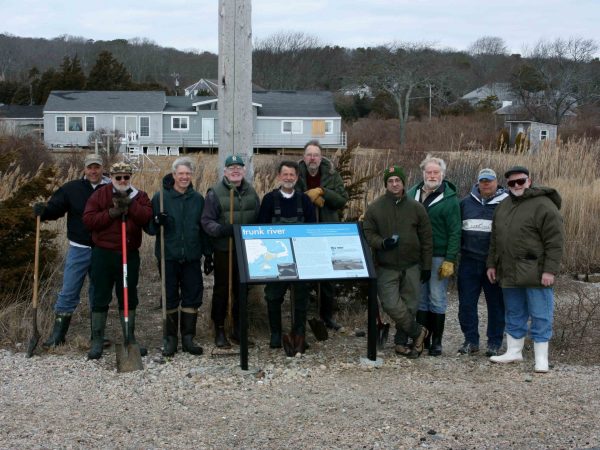
Peter Valtin and Steve Leighton test driving Steve's eel grass rake invention in the Lagoon on March 4th. OPET volunteers were opening up a passage way through the accumulated eel grass muck for the soon to be migrating herring. See more pictures below.

We have 5 numbers for the 2012 New Balance Falmouth Road Race!   For the first time, we are participating in the Numbers-for Nonprofits Program that offers local non-profits the opportunity to raise funds from runners participating in the  New Balance Falmouth Road Race. 
We are looking for runners who wish to join us!  To be eligible to use our numbers, you must be willing to raise $1000 for OPET.   Of course we welcome those with their own numbers to join the OPET Team and help raise money for OPET!
Your donations support our many projects, including the following:

  • Restoration of the native shoreline habitat and scenic vistas of the pond from the bike path.  Removal of invasive plants allowed long suppressed native vegetation to rebound, providing habitat to birds and wildlife.  Next year we will expand our efforts to the entire pond shoreline.
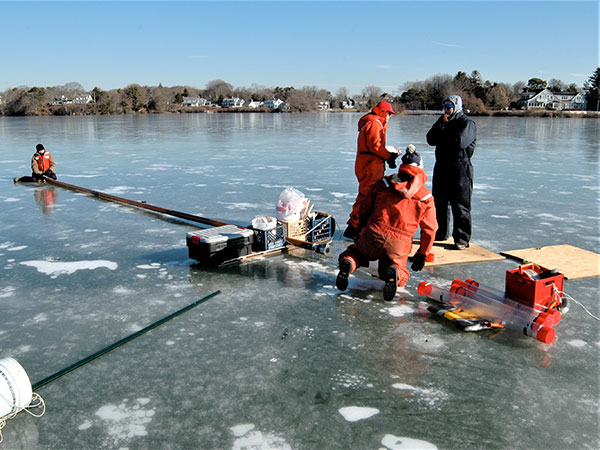
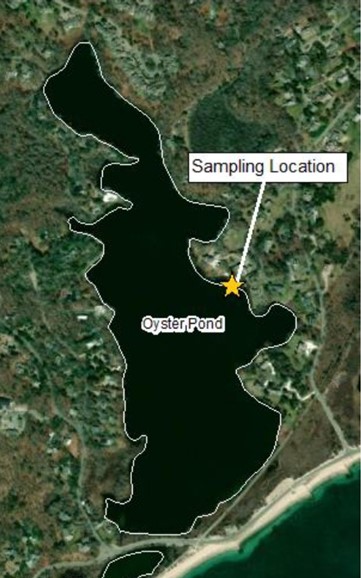
  • Ongoing, long-term scientific sampling and analysis of the pond water in collaboration with the Woods Hole Research Center.  This is important to monitor changes in the pond’s water quality.
  • Maintaining open passage between Vineyard Sound and Oyster Pond for both our resident herring population and to sustain water flow out of the Pond using OPET volunteers, and in coordination with the Town DPW.  Our monitoring of this area helps herring navigate to the pond and prevents the unsightly algae buildup that plagued the area in past summers.

For more information about our work and our organization, please email us at info@opet.org.  We are a 501 c3 non-profit organization.

www.flickr.com
OPET2012's Lagoon Clearing 2012 photoset OPET2012's Lagoon Clearing 2012 photoset


In the News

The National Oceanic and Atmospheric Administration (NOAA) is reviewing the status of two species that live in Oyster Pond – alewife herring (Alosa pseudoharengus) and the American eel (Anguilla rostrata).  NOAA was petitioned by environmental groups to list them as “threatened” under the Endangered Species Act.  Both species have seen significant declines in their populations.

In November 2011, NOAA finished an initial 90 day review and listed river herring (both alewives and blueback herring) as a “Species of Concern”.  Over the next 12 months, NOAA will conduct an in-depth review of scientific and commercial information, the impacts of threats to the populations and on- going conservation efforts to decide whether river herring should be listed as a threatened species.

NOAA is still conducting the initial 90 day review for American eels. The review period ended in December 2011 and their decision is expected shortly. NOAA declined to add the American eel in 2007 to the Endangered Species List.  This new status review will examine new information not available in 2007 such as the impacts of a parasitic nematode and climate change on eel populations.

Oyster Pond’s own herring population has dropped significantly from 1960s levels when observers say herring were so thick they were like” a fire hose of fish”– you could scoop as much as you wanted and they still kept coming.    Volunteer herring counters over the past three years have seen a stable annaul inflow of around 2,000 adult herring into Oyster Pond.  We are fortunate that we have not seen the estimated 98% decline in herring populations experienced in other New England rivers.  One of the worse was the Connecticut River where levels dropped precipitously from 630,000 herring in 1985 to 21 fish in 2006.

Less is known about our eel population due to their more elusive live style.  One herring counter did see hundreds of tiny eels, known as glass eels; migrate into Oyster Pond a few years ago.  If you go down to Trunk River and carefully dig up the rocks, you can see glass eels wiggle out of the way.


Become a Member of OPET today


Oyster Pond Environmental Trust, Inc.
501(c) 3 non-profit organization
PO Box 496 • Woods Hole, MA 02543-0496